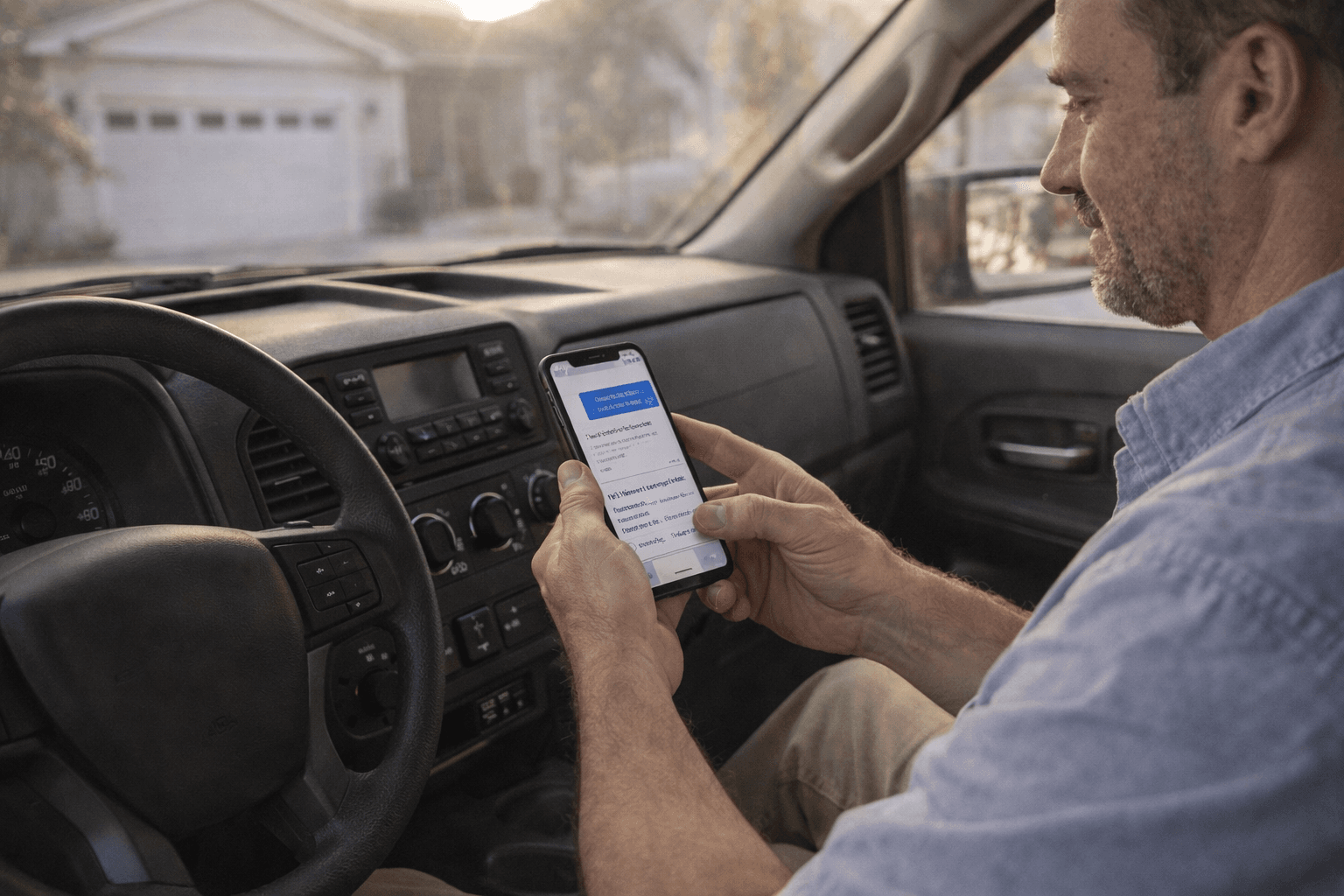
You drove out to the job. You measured everything. You wrote up the estimate. You sent it over. And then you waited.
And waited.
A week goes by. Nothing. So you move on to the next lead and forget about it.
Here's what you don't know: that customer probably wanted to hire you. They just got busy. Life happened. Your estimate is sitting in their inbox underneath 47 other emails, and they fully intended to get back to you.
The contractor who follows up is the one who gets the job. The one who doesn't is the one who wonders why close rates are so low.
The Numbers Don't Lie
Studies across the home services industry consistently show that businesses who follow up with leads close 30% to 40% more jobs than those who don't. That's not a marginal improvement. If you're closing 10 jobs a month, that's 3 to 4 extra jobs just from sending a text or email you weren't sending before.
And yet, 48% of salespeople (and most contractors) never follow up at all. Not once. They send the estimate and hope for the best.
Hope is not a sales strategy.
The Three Touch Follow Up
You don't need a complicated CRM or a 12 step email sequence. You need three follow ups at three specific times. Here's exactly what to send.
Touch 1: 24 Hours After the Estimate
This one is just a check in. Keep it casual.
Text or email: "Hey [Name], it's [Your Name] from [Company]. Just wanted to make sure you got the estimate I sent over yesterday. Let me know if you have any questions or if anything needs adjusting. Happy to walk through it with you."
That's it. You're not pushing. You're not asking for a decision. You're just making sure they saw it and opening the door for questions. Most of the time, this single follow up is enough to get a response.
Touch 2: 3 Days After the Estimate
If you haven't heard back, send another one. This time, add a little value.
Text or email: "Hi [Name], just circling back on the estimate for your [project type]. I wanted to mention that we've got availability starting [date], so if you'd like to get on the schedule, now's a great time. No rush, but I didn't want you to miss the window. Let me know what you're thinking."
This does two things. It creates a small sense of urgency (without being pushy) and it shows you're organized and in demand. Both of those build confidence.
Touch 3: 7 Days After the Estimate
Last one. If they haven't responded by now, they're either not interested or they're still deciding. Either way, this message gives them an easy out while leaving the door open.
Text or email: "Hey [Name], I know life gets busy so I just wanted to follow up one last time on the [project type] estimate. If you've decided to go a different direction, no hard feelings at all. But if you're still thinking it over, I'm here whenever you're ready. Just give me a shout."
This works because it's respectful. You're not begging. You're giving them permission to say no, which paradoxically makes them more likely to say yes. People respond to low pressure honesty.
Why Text Works Better Than Email
For follow ups in the trades, text messages get opened and read within minutes. Emails sit in inboxes for hours or days. If you got the customer's cell number during the estimate process, use it.
Keep texts short. No paragraphs. No links. Just a quick, human message that sounds like it came from a real person, because it did.
That said, some customers prefer email, especially for larger projects. If you have both, send the first follow up as a text and the second as an email. Cover your bases.
What If They Say No?
Good. Now you know. A clear no is better than silence because it frees you up to focus on leads that are actually going somewhere. And sometimes a "no" today turns into a "yes" in six months when the project becomes urgent.
If they say they went with someone else, respond graciously. "Thanks for letting me know. If anything changes or you need help down the road, don't hesitate to reach out." That kind of professionalism gets remembered. And it gets referrals.
Make It a Habit, Not a Heroic Effort
The follow up only works if you actually do it. The best approach is to build it into your routine. Every morning, check which estimates are at the 24 hour, 3 day, and 7 day marks. Send the messages. It takes five minutes.
If you want to make it even easier, most CRM tools and even basic automation platforms can send these follow ups automatically. You set the timing once and it handles the rest.
But even if you do it manually from your phone, five minutes a day could be worth thousands of dollars a month in jobs you would have otherwise lost.
Stop Losing Jobs to Silence
You're already doing the hard part: showing up, measuring, writing the estimate. The follow up is the easy part. It just takes consistency.
Get a free audit and we'll show you how many leads you're losing after the first touch and how to fix it.
<!-- IMAGE PROMPT: Photorealistic 16:9 image of a contractor sitting in a work truck looking at his phone, sending a text message, dashboard and steering wheel visible, parked in a residential driveway, morning light, casual and natural pose -->