AI Tools Every Small Business Should Be Using in 2026
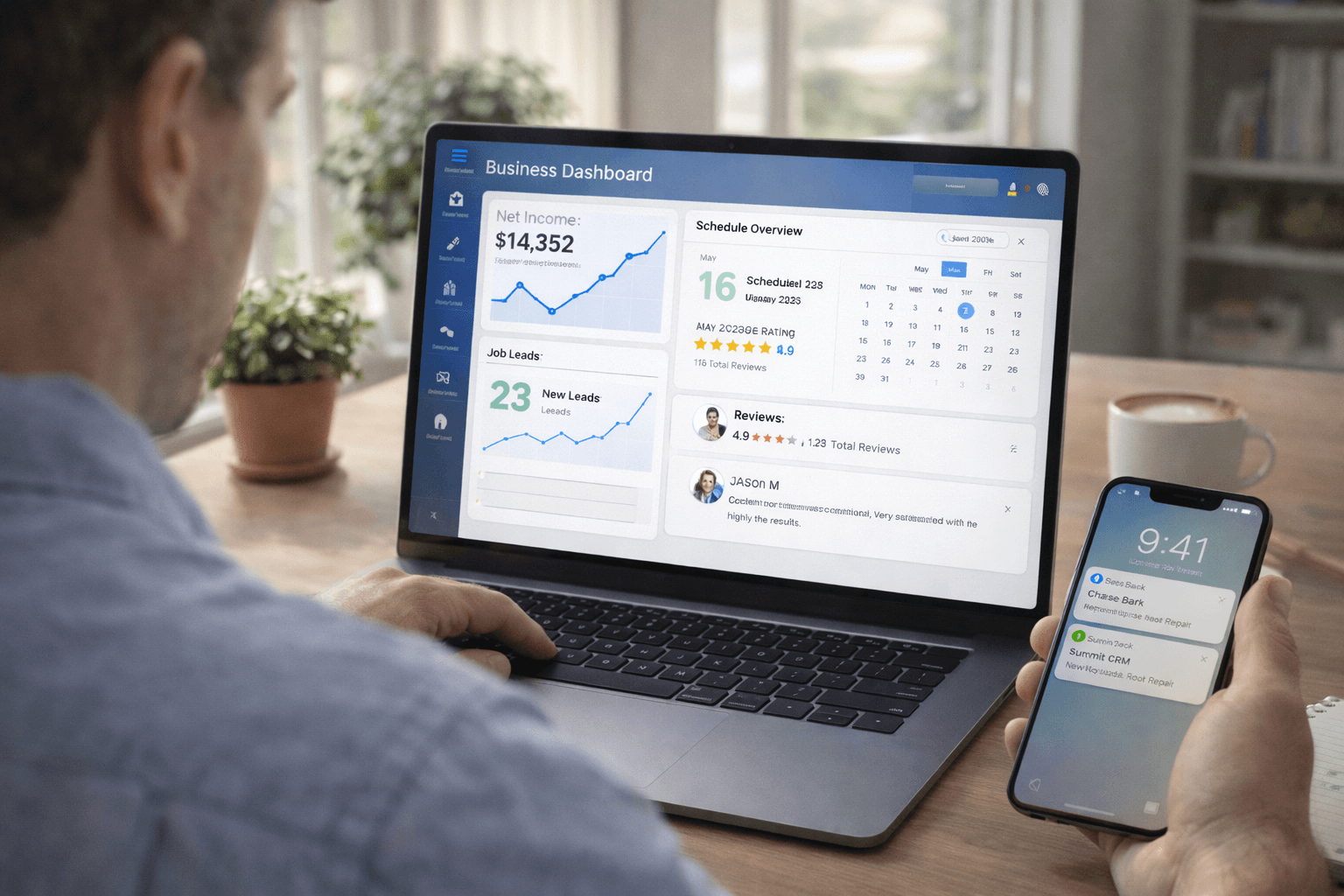
Everyone's talking about AI. Half of it is hype. The other half is genuinely useful stuff that can save your business hours every week and help you compete with companies ten times your size.
The problem is figuring out which half is which.
If you're a small business owner, you don't have time to test every new tool that launches. You need to know what's actually worth using right now, what's a waste of money, and what's going to matter six months from now.
Here's the honest breakdown for 2026.
AI Chat on Your Website
What it does: An AI chatbot sits on your website and answers customer questions 24/7. Not the old school "click a button for a canned response" chatbots. These actually understand questions and give useful answers based on your business information.
Is it worth it? Yes. This is one of the highest value AI tools for small businesses right now. Most website visitors have simple questions. "Do you serve my area?" "How much does a basic service cost?" "Are you available this weekend?" An AI chat handles these instantly instead of making the customer wait until you check your email.
The key is making sure it's trained on your actual business info. Services, pricing, service area, hours. A generic chatbot that gives vague answers is worse than no chatbot at all.
Best for: Service businesses that get a lot of the same questions. Contractors, medical offices, auto shops, salons.
AI Call Answering
What it does: An AI answers your phone when you can't. Not a robotic voice menu. A conversational AI that sounds natural, gathers the caller's information, answers basic questions, and sends you the details.
Is it worth it? For businesses that miss calls regularly, absolutely. If you're a one person operation or a small crew that's on job sites all day, you're missing calls. Every missed call is a potential lost customer.
AI call answering bridges that gap. The caller gets a real conversation instead of voicemail. You get a detailed summary of what they need. And you can call them back when you're free.
Best for: Any business where the owner or a small team is too busy to answer every call. Towing companies, plumbers, electricians, HVAC techs.
AI Generated Blog Content for SEO
What it does: AI writes blog posts and website content optimized for search engines. Topics like "How to Choose a Roofing Contractor" or "5 Signs Your AC Needs Repair" that help your site show up in Google searches.
Is it worth it? Yes, with a big caveat. AI can produce decent first drafts quickly. But you need to review everything before publishing. Make sure the information is accurate, the tone matches your brand, and it actually says something useful.
The real value here is consistency. Most small business owners know they should be posting content regularly for SEO. Almost none of them actually do it because who has time to write blog posts? AI makes it realistic to publish two to four posts a month without spending hours writing.
Best for: Any business that wants to rank higher in Google searches. The content needs to be relevant to what your customers are searching for in your area.
AI Search Visibility (llms.txt)
What it does: This is newer and most businesses haven't heard of it yet. An llms.txt file on your website tells AI search engines (like ChatGPT, Perplexity, and Google AI Overviews) what your business does, where you're located, and what services you offer.
Is it worth it? It's becoming worth it fast. More and more people are using AI search tools instead of traditional Google. When someone asks an AI assistant "find me a plumber in Denver," the AI pulls from websites that have structured their information clearly.
Having an llms.txt file is like having SEO for AI search engines. It's free to set up and it positions you for where search is heading.
Best for: Forward thinking businesses that want to be early. This will be table stakes in a year or two. Getting ahead now is smart.
What's NOT Worth It Yet
Let's be honest about what doesn't make sense for most small businesses right now.
AI social media managers that post automatically. The content is usually generic and obvious. Your customers can tell. It's better to post less frequently with real photos and updates than to automate five bland posts a week.
AI pricing optimization tools. These work for e-commerce with thousands of products. For a service business with a handful of pricing tiers, you don't need an algorithm. You need to know your market.
AI employee scheduling. If you have three employees, a spreadsheet works fine. These tools start making sense at 15+ employees with complex shift patterns.
Any tool that promises to "replace" your marketing entirely. AI is a tool. It amplifies what you're already doing. If your foundation (website, reviews, response time) isn't solid, no AI tool will fix that.
The Smart Approach
Don't try to adopt everything at once. Start with the tools that solve your biggest pain point.
Missing calls? AI call answering.
Website visitors leaving without contacting you? AI chat.
Not showing up in Google? AI generated content.
Want to stay ahead of the curve? Set up your llms.txt file.
Each of these individually is a small improvement. Together, they add up to a business that runs smoother, responds faster, and shows up in more places than your competitors.
Want to know which AI tools would make the biggest impact on your specific business? Get a free audit and we'll give you a personalized recommendation based on where you're at right now.
<!-- IMAGE PROMPT: Photorealistic 16:9 image of a small business owner at a desk with a laptop showing a modern dashboard interface, smartphone beside the laptop showing notification alerts, clean modern office with natural light, warm and productive atmosphere, 2026 technology feel without being futuristic -->